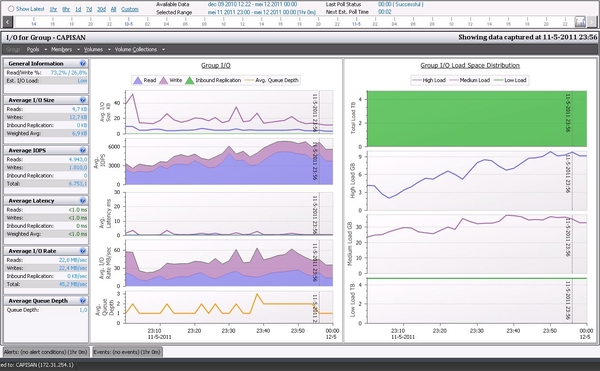
I do see a lot of questions regarding Equallogic and IOPS, especially after the Hybrid arrays surfaced in to the public. The XVS from the PS6000-series and the new XS from the 4100 and 6100 series are those arrays I get an IOPS request for most often.
But it is not so simpel to state an IOPS number for these arrays, I do know the simple math when adding IOPS performance from all disks. This though, does not take a lot of things into calculation like how much can the mirrored cache on the controllers add in performance, what are the read/write ratio etcetera.
If you talk with some of the Dell partners who are certified in Dell storage, they are able to help with sizing of the Equallogic platform, but also take the above mentioned points into consideration. Dell has an on-line sizing tool, where the partner can create both existing environment (of Equallogic) and show the predicted performance when you buy additional arrays. The same tool certainly also show what a new setup will look like from performance perspective.
Before you do that why not run Dpack analyse ?
Dpack is Dell’s Performance Analysis Collection Kit which runs for 4 to 24 hours as usual, but is also able to log for up to 7 days if needed. Dpack runs in memory, so you don not need to install anything and after collecting is done you simply send in the collected data and get a nice performance report back from your Dell partner.
After reading the report, just tell your Dell Partner to size an Equallogic platform based on the Dpack outcome. Now you’re done and problably get a fine quote with a number of Equallogic arrays. This can be made so simple.
I’m sorry for not detailing the IOPS for the XVS or XS arrays, but at Dell we use a thing called RPS score which is very dependent of the read/write ratio and the arrays choosen.

